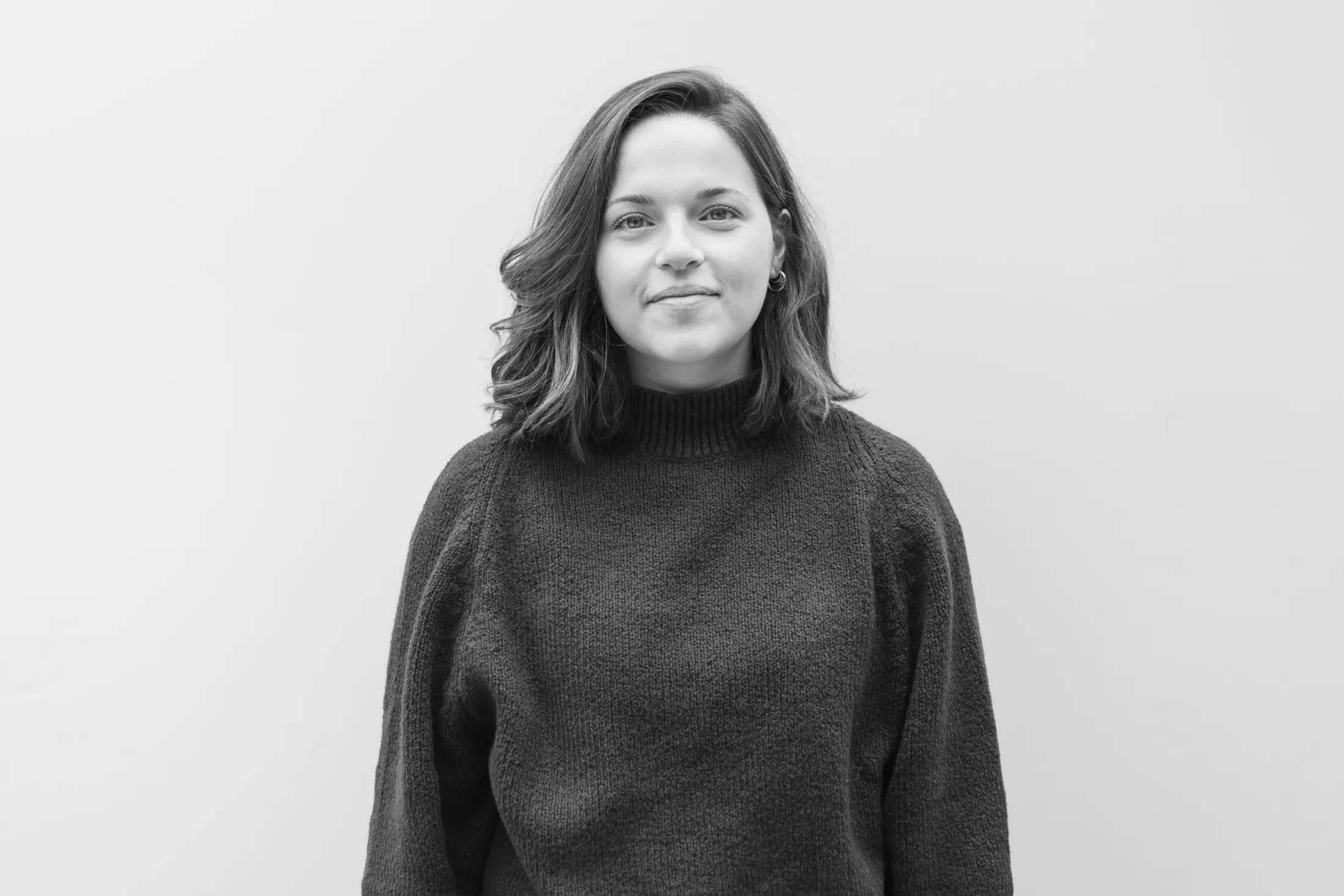
This week, meet Anabel Beaulieu, architect and partner at LemayMichaud.
An architect and project lead at the Québec office for the past 10 years, Anabel has distinguished herself through her leadership, exceptional organizational skills, and her human-centered approach. Her energy and collaborative spirit naturally led her to become a partner in 2025.
In this article, Anabel shares her vision of deeply human-centered architecture, where details matter as much as ideas, and where relationships — with clients, colleagues, and users alike — form the very foundation of her practice. Through formative travels, landmark projects, and personal reflections, she opens a window into her work with humility and simplicity.
Discover her journey, her vision, and what drives her every day.
Q. At what point did you realize you wanted to become an architect? Was there an event or experience that influenced your choice?
A.B. “I’ve always been drawn to science, math, and the arts. At that time, I already had an interest in architecture, and I remember my high school guidance counselor telling me that architecture was practically the only field that brought all my interests together. What fascinated me most was this unique way architecture has of combining rigor with creativity.
I had been accepted into chemistry at university, but when the offer for architecture came, the decision was obvious. Architecture presented itself naturally, in alignment with my interests, my values, and what the profession has to offer.”
Q. If you had to choose three words to describe yourself, which would they be?
A.B. “I would start with human. I place great importance on the quality of relationships, on collaboration, and on creating an environment where everyone feels involved and respected.
Next, perfectionist — in both the good and not-so-good sense of the word,” she adds with a laugh. “I care deeply about details; I like to refine and improve things, always with the desire to do them well, while never losing sight of people and the project’s goals.
And finally, positive. I like to maintain an optimistic outlook, which helps me move forward and guide projects in the right direction.”
Q. Can you tell us more about your journey and what led you to your current role at LemayMichaud?
A.B. “A defining moment in my journey was a study term in Mexico during my third year of university. Being immersed in another culture, surrounded by students from all over the world, opened me up profoundly, both personally and professionally. There, the approach to architecture was very different from what I was used to. We studied local architects and were encouraged to integrate color, experiential qualities, and culture into our projects. It allowed me to step outside the box and develop a broader, more creative perspective on my discipline.
At the same time, I worked several years in the restaurant industry. That’s really where I strengthened my listening skills, sense of hospitality, and ability to anticipate people’s needs. These qualities continue to shape both my relationships with clients and with colleagues.
When I finished my studies, I applied at LemayMichaud. I started as an intern… and I never left! Right away, I felt a strong resonance between who I am and the spirit of the firm: human, rigorous, and deeply committed to teamwork.”
Q. Can you tell us about a project you worked on that left a lasting impression on you?
A.B. “One project that really stood out to me was the Simons store in Toronto. It was one of the first large-scale mandates I had the chance to work on early in my career, and I found myself responsible for developing the ‘floating’ architectural staircase. It was a major feature of the project — both complex and highly visible — and a real coordination challenge, especially at the start of my professional journey. I was able to collaborate directly with structural engineers and lighting specialists, and little by little, this element of the project became very meaningful to me. It was truly exciting to contribute to such an architectural centerpiece.
Another project that left a lasting impression on me is the Fasken offices in Québec City, which was significant in a different way. We were brought in very early in the process, while the building was still under construction. That kind of mandate, where you’re almost starting from a blank slate, allows for close collaboration with the base-building architects, the engineers, and — most importantly — with a client who was curious, attentive, and eager to do things differently. We were able to really push the design, experiment with new materials, and refine the details… which led to a very special project. It’s one of those experiences that helped me develop sharper instincts and a deeper sensitivity to the quality of interior design.”
Q. What is your favorite aspect of your role as an architect, and more recently, as a partner?
A.B. “What I love most about being an architect is the richness of the exchanges. It’s such a versatile profession — we touch on everything: design, coordination, construction… But what really drives me is the connection with the client. I like making sure the vision remains clear from start to finish, and that everyone moves in the same direction to meet the project’s goals and expectations.
Since becoming a partner, human relationships have taken on an even more central place for me. I believe that when people feel heard, supported, and trusted, everything else follows naturally. Being able to contribute to that every day, by helping, guiding, or simply being present, is what truly gives meaning to my role.”
Q. Which stage of the design and project delivery process excites you the most, and why?
A.B. “I really enjoy the beginning of a project — when everything is still possible, when we’re reflecting on intentions and what we truly want to achieve. Even though I have a fairly analytical side, I love that more creative phase. I may not be the one to bring the boldest ideas, but I enjoy being part of the discussions, asking questions, and understanding the ‘why’ behind the choices. That then allows me to do my work better. Because at the end of the day, my role is to move the project forward: coordinating steps, making sure everyone is aligned, ensuring that the early decisions are carried through to the end, and maintaining the connection with the client throughout. That’s really where I’m in my element.
Even though I really enjoy that initial phase of reflection, what truly drives me is when the project takes shape. The management, the planning, the execution… that’s when I feel useful, when I feel I can really make a difference.”
Q. Is there an aspect of architecture, or of being an architect, that you feel is underestimated but essential?
A.B. “Yes, absolutely: the human aspect. It’s not talked about much, but it’s fundamental. In our training, we’re taught to think critically and be rigorous, but very little emphasis is placed on human relationships: knowing how to listen, understanding clients’ realities, adjusting our posture depending on the situation, or managing team dynamics. Yet whether it’s with a client or a colleague, it’s the quality of the exchanges and the trust that move a project forward.
Another equally underestimated aspect is organization. Architects are, of course, seen as creative figures, and rightly so, but the success of a project depends just as much on the ability to structure, plan, and coordinate. Without that dimension, even the best ideas risk never coming to life.”
Q. Has there been a trip, a meeting, or a particular experience that has influenced the way you design or approach projects?
A.B. “During a trip to Brittany with my partner, I was struck by the way architecture blends so naturally into the landscape and cultural fabric. That experience made me realize, even more clearly, that a project should never be conceived apart from its context; it has to interact with its surroundings. Every architect will tell you this, but the orientation of a building and the choice of materials are what truly make the difference in a project’s quality and longevity, allowing architecture to integrate harmoniously into its environment while providing real added value.”
Q. What advice would you give to an aspiring architect?
A.B. “I believe the most important thing is to listen to yourself and stay true to your values. I would also add that architecture is not just about design. It’s a rich and multifaceted profession that touches on many other aspects: team management, coordinating technical and human constraints, administration, and much more. It’s this diversity of roles that makes our profession so stimulating and never repetitive!”
Quick Q&A
Q. Develop or create?
Develop.
Q. Dreamer or realist?
A realistic dreamer!
Q. What motivates you to get up in the morning?
Challenges and the variety of projects.
Q. Your favorite part of your work?
Watching a project evolve on site, tackling challenges that allow us to achieve the envisioned result. Seeing our documents and plans come to life is a part of my work that I particularly enjoy.
Q. Do you have a guiding philosophy today?
Authenticity and sensitivity; they help me stay true to myself.
Q. Black and white or colors?
Rather black and white.
Q. Mies van der Rohe or Frank Gehry?
Mies van der Rohe.
Q. Is there a work you wish you had created?
In general, I am impressed by Zaha Hadid’s works.