EMBLM
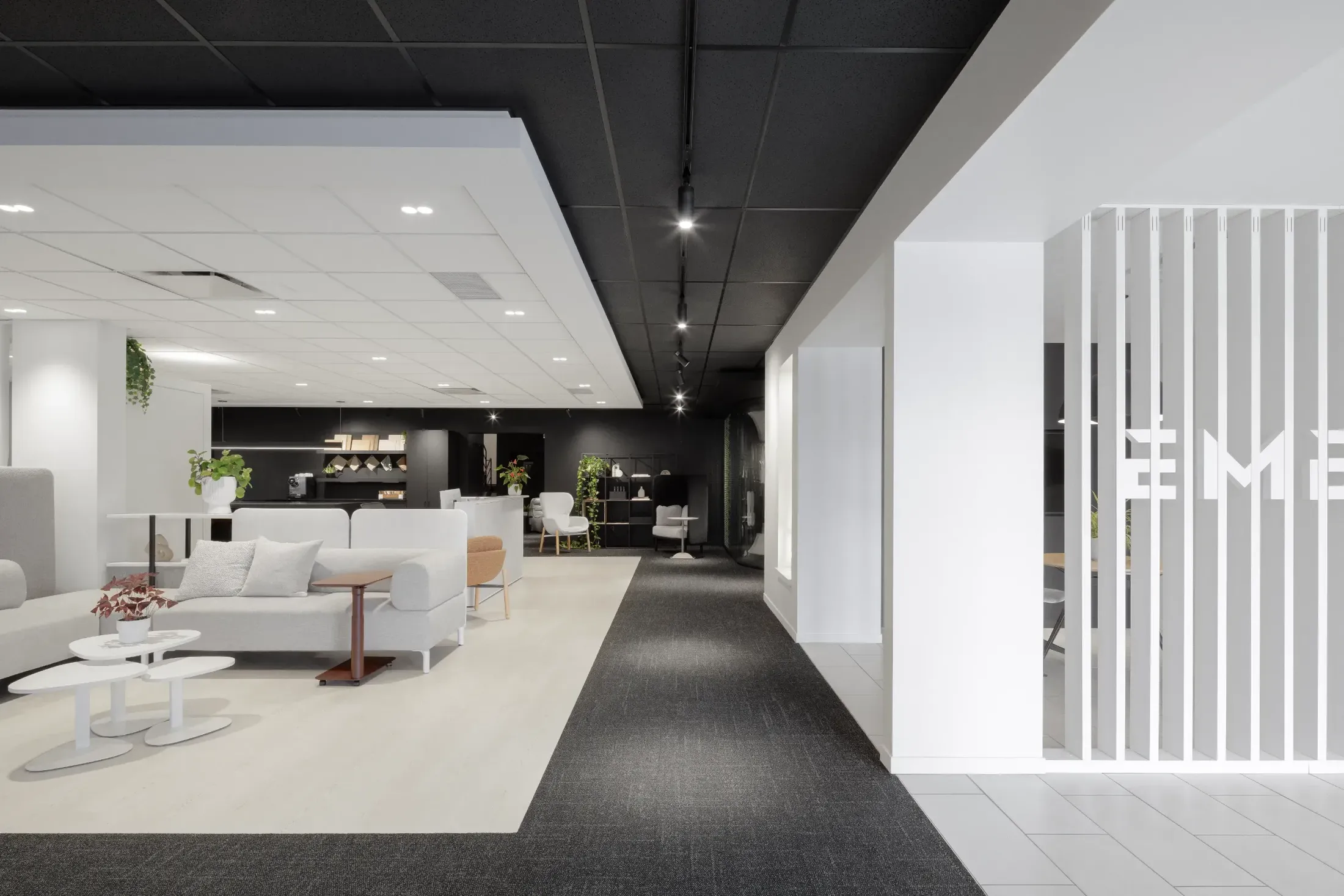
A Curated Showroom
The renovation of the EMBLM Québec showroom was guided by a clear vision: to transform an existing space into a compelling environment, capable of reflecting the company’s contemporary identity while serving as an immersive demonstration tool.
The objective was not to add more, but to clarify. Strip away to uncover. Structure to showcase. The project is built on a modern, deliberately pure and neutral backdrop, conceived as an architectural canvas where the products themselves take center stage.
Structuring Without Fragmenting
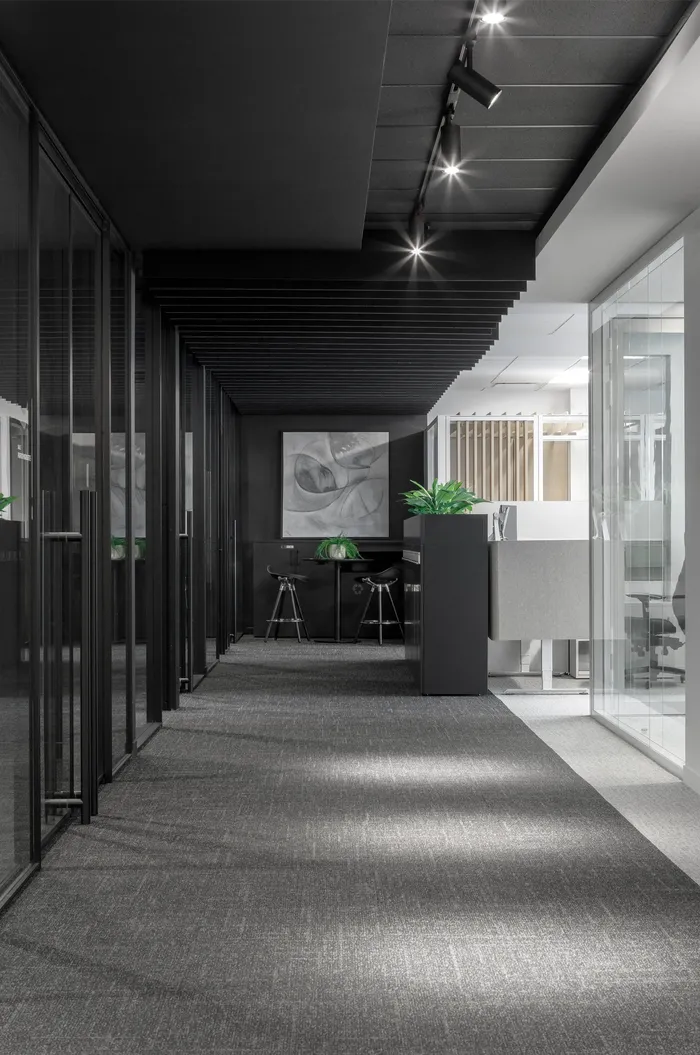
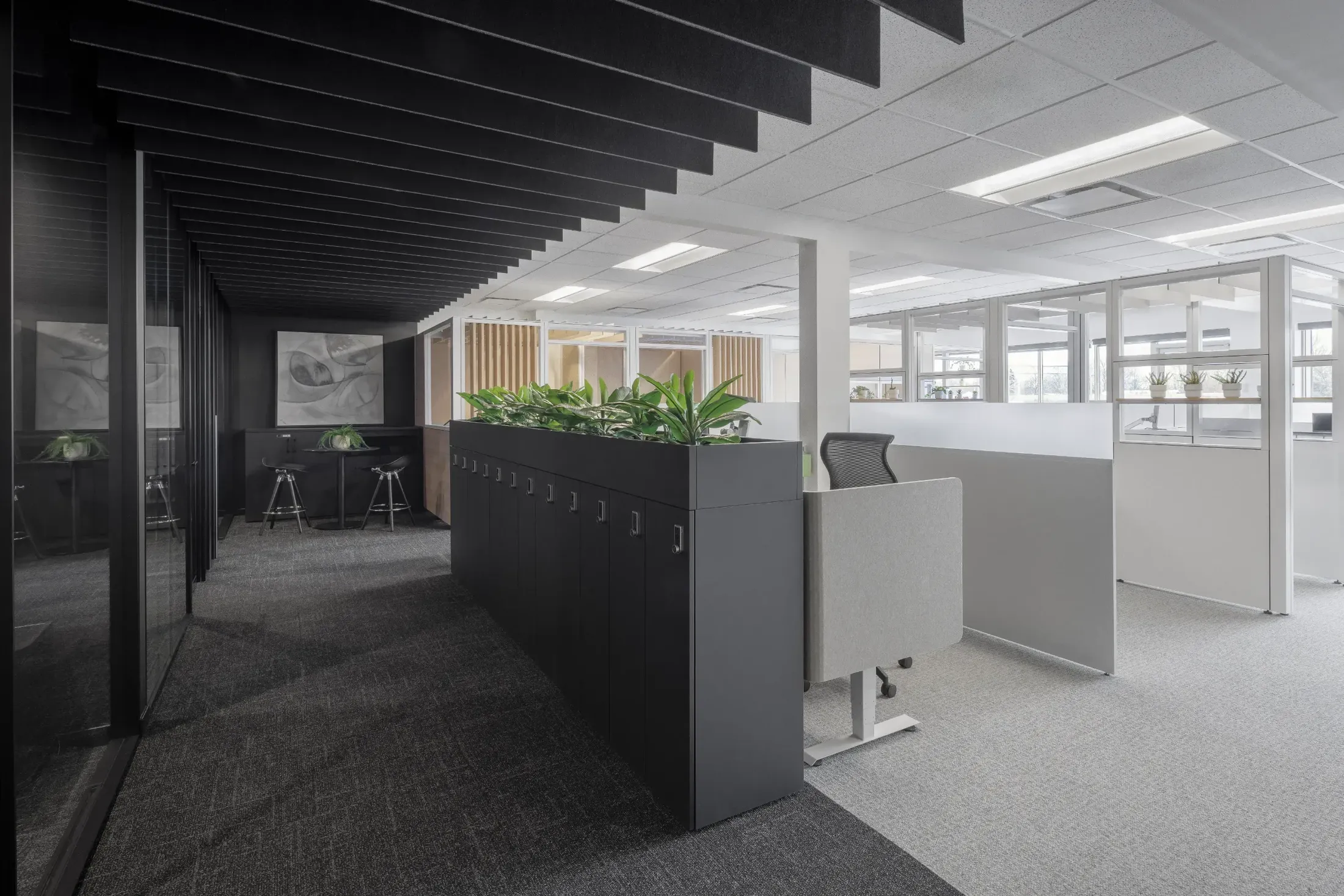
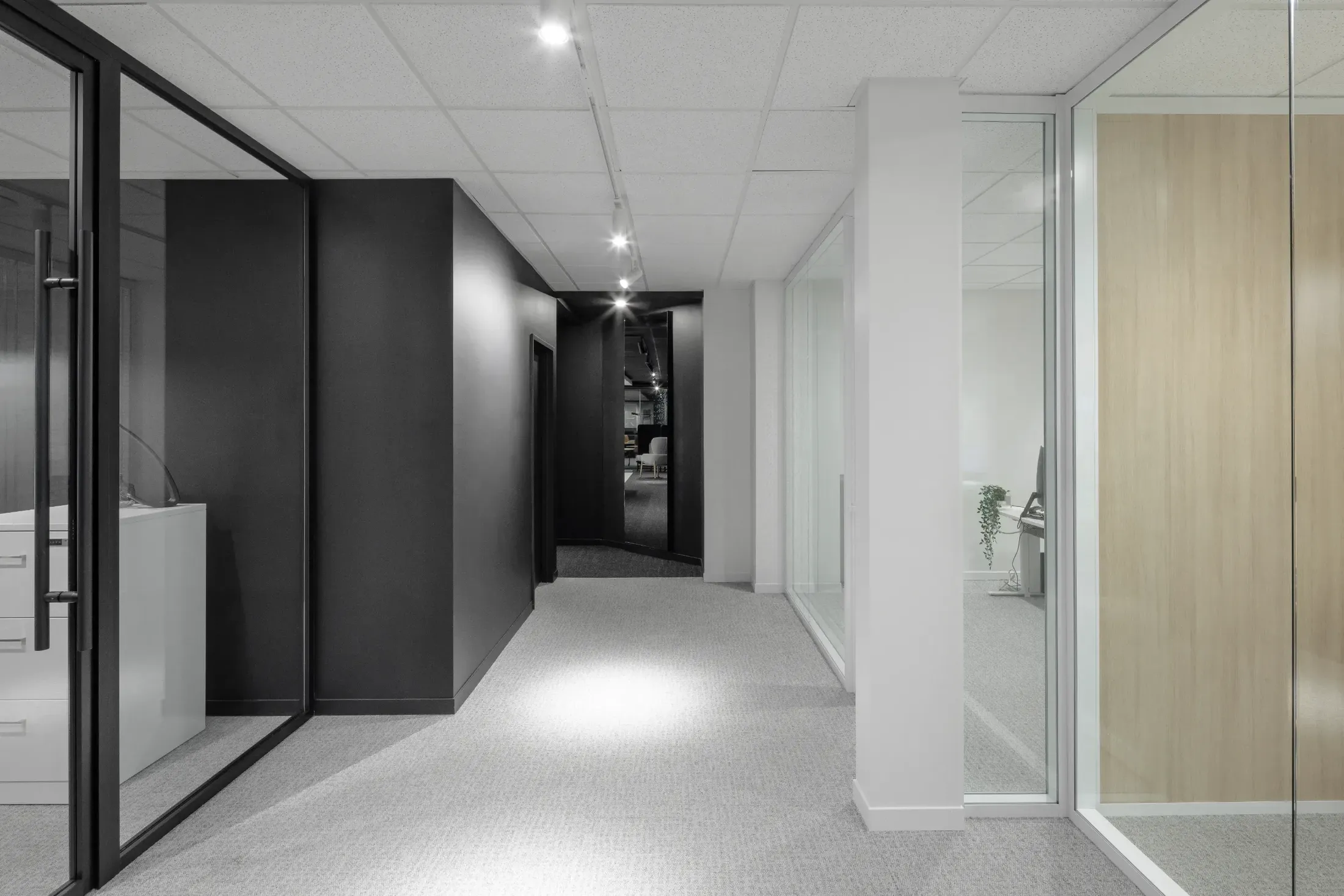
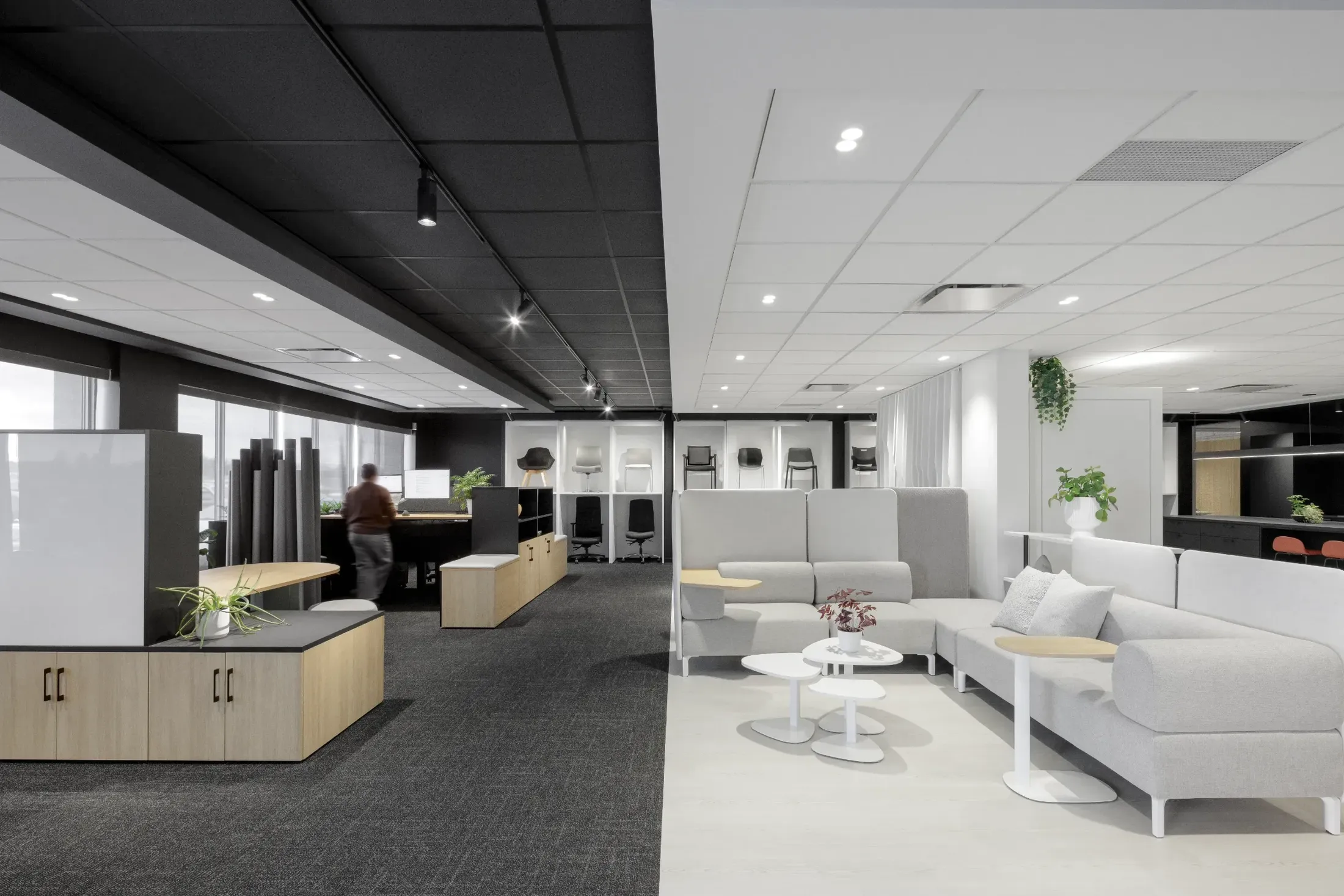
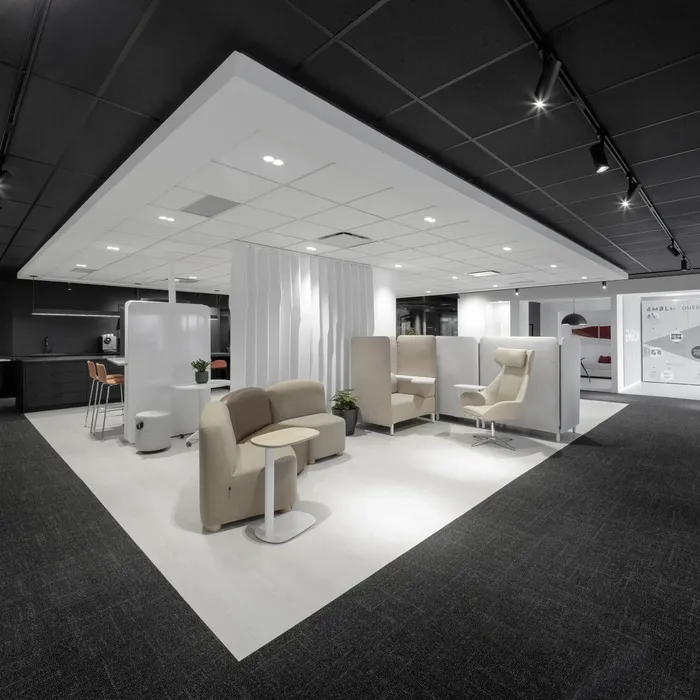
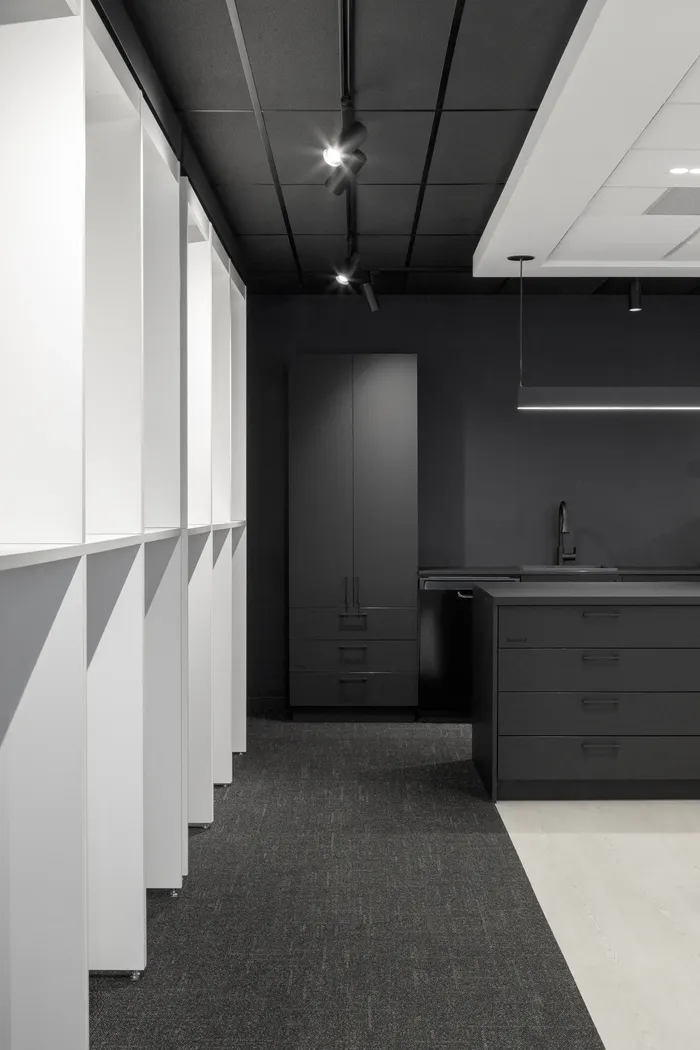
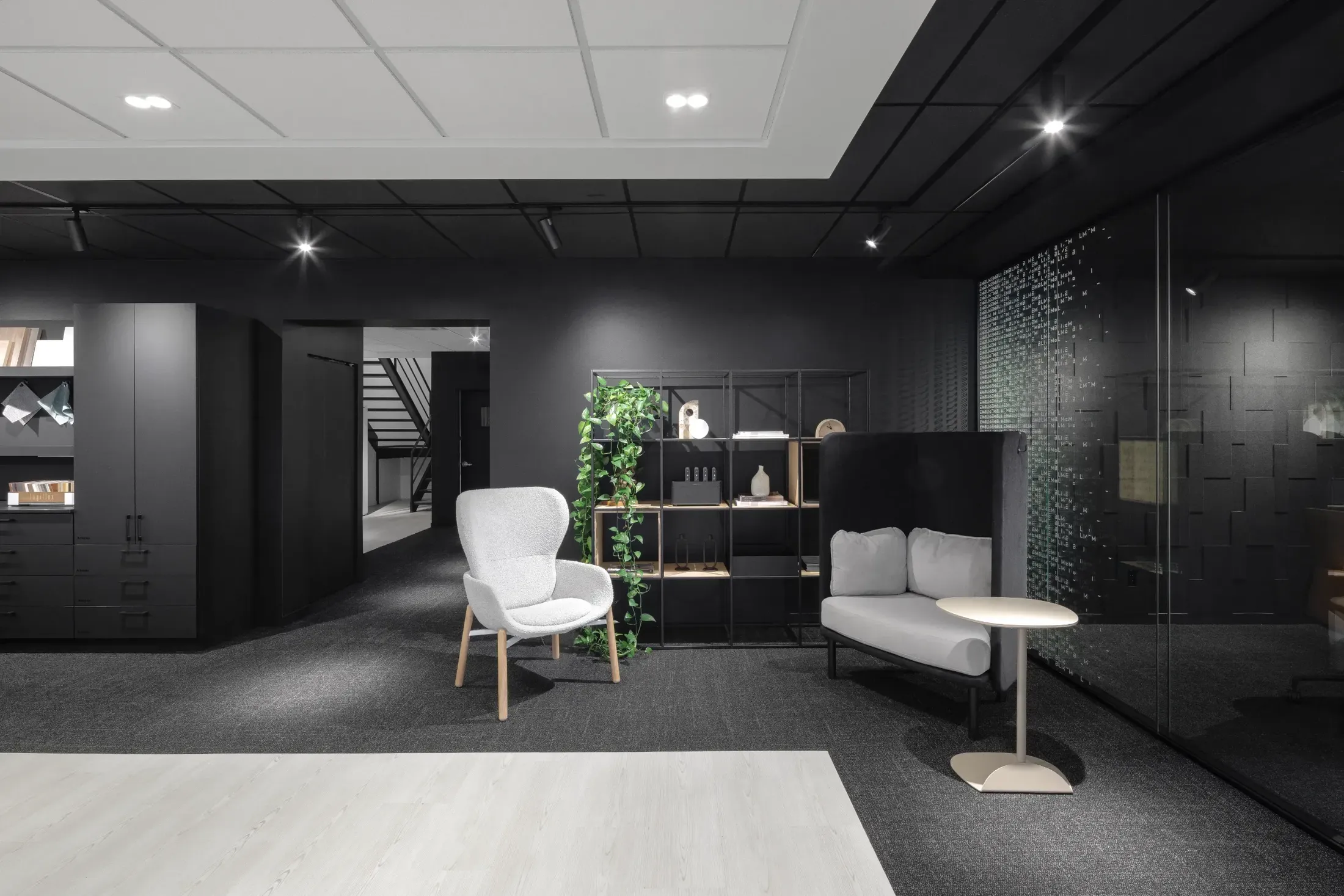
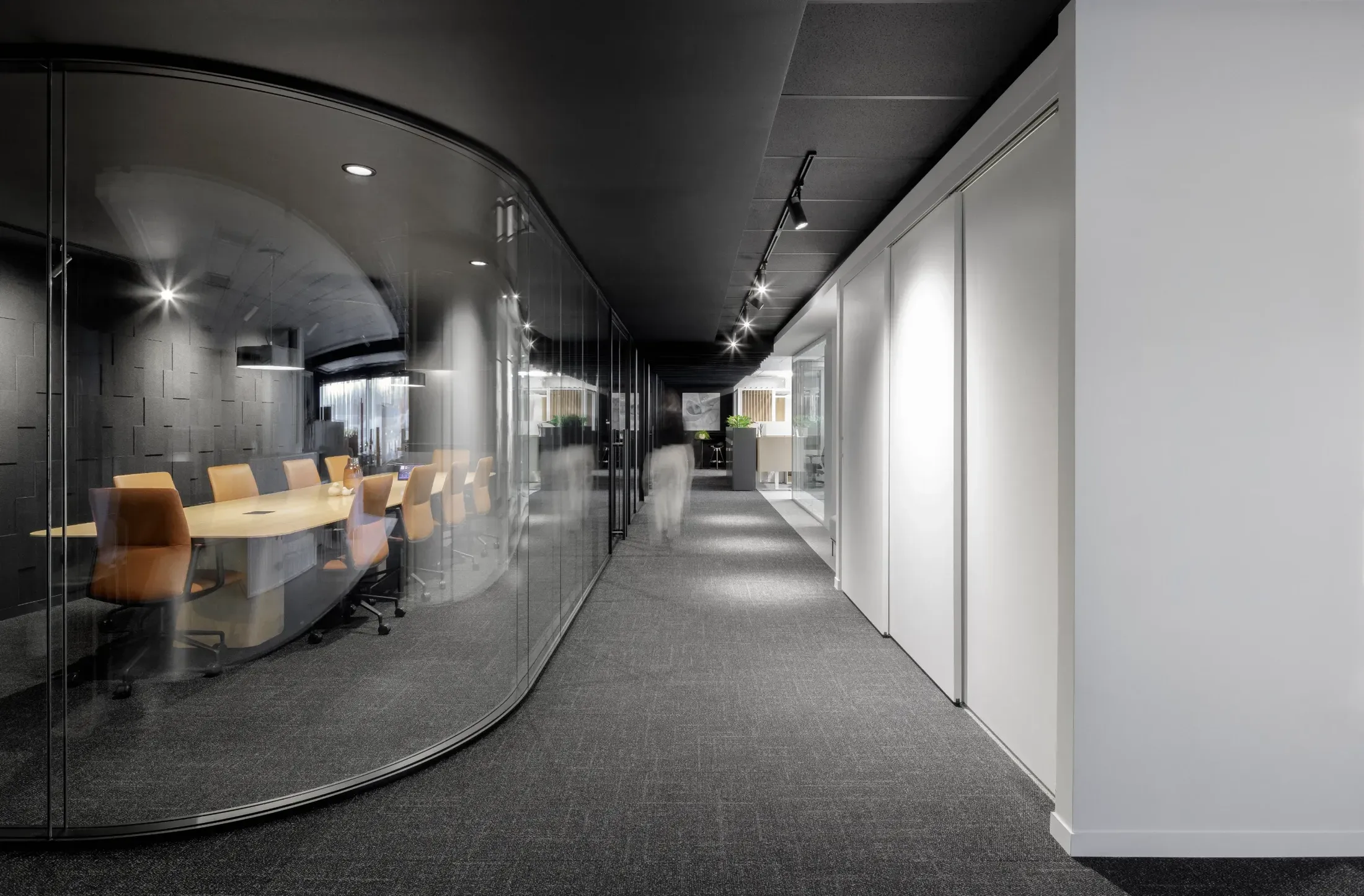
The design approach favors a refined and controlled formal language. Surfaces are clean, lines deliberate, details carefully considered. A restrained palette of black and white, punctuated by bold contrasts, creates a graphic tension that organizes the open floor plan without breaking it into fragments. Black, used as an anchoring element, gives the space contemporary elegance and visual depth, enhancing its volumes. This chromatic strategy defines distinct zones within a vast open floor, without relying on opaque partitions. The space breathes yet remains composed.
Circulation and flow were central to the design. In a showroom context, the pathway itself becomes a narrative. Axes were clarified to orchestrate an intuitive experience, where each movement naturally leads to a new setup. Close collaboration with the EMBLM team and their suppliers ensured that furniture and partition solutions were presented coherently, integrated into believable environments rather than isolated displays. Each area becomes a living demonstration of a workspace typology, illustrating the versatility of the systems on offer.
Shaping Space for Interaction
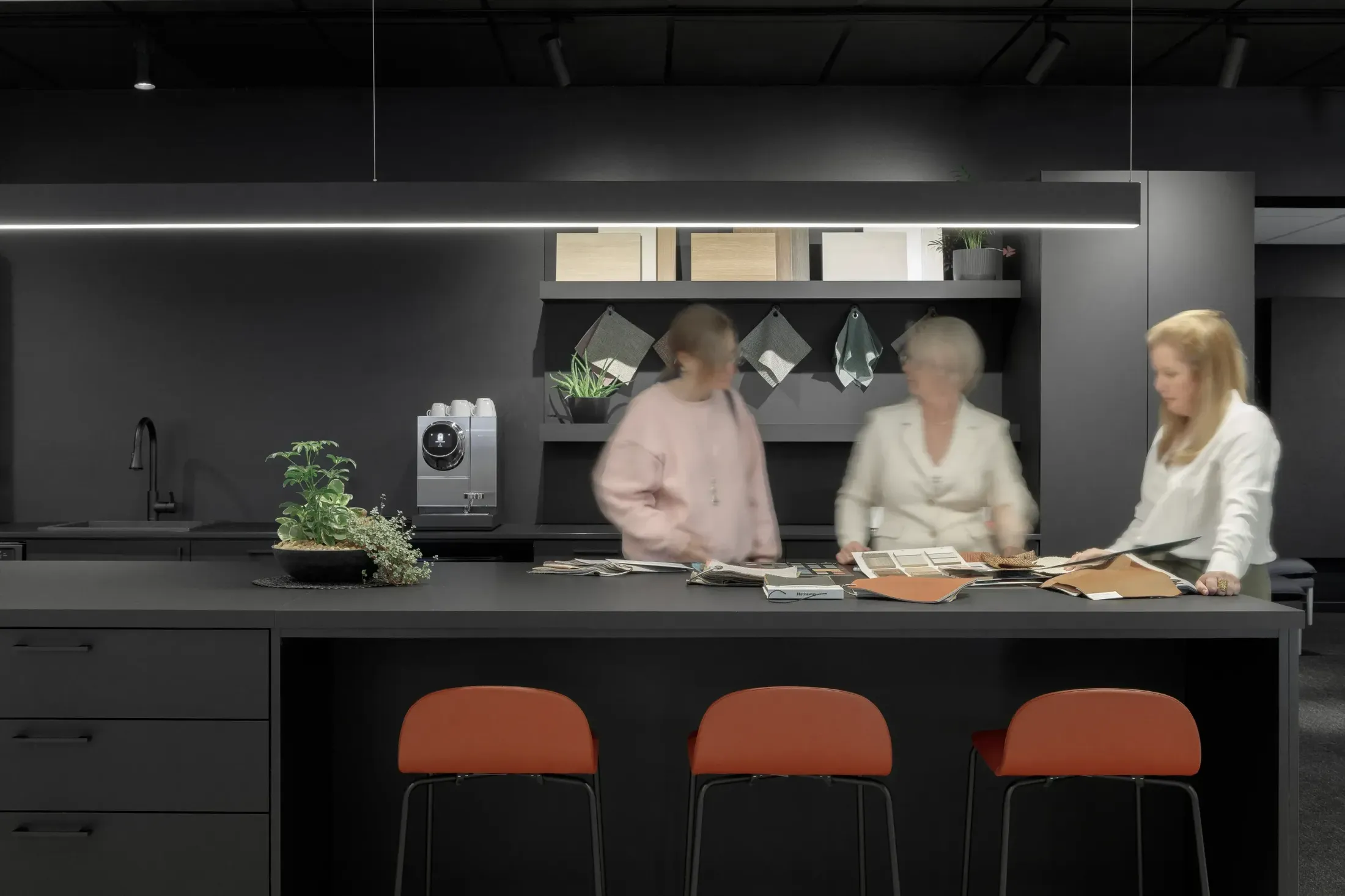
At the heart of the project, the kitchen island acts as both a spatial and social pivot. Far beyond its utilitarian function, it becomes a true crossroads, a meeting point for clients, a convergence zone for employees, and a space for informal interaction. It embodies the human dimension of the project. Its design incorporates a material library and cleverly concealed storage, ensuring maximum functionality without compromising the formal purity of the space. This central element structures the open floor while fostering conviviality and spontaneous interaction.
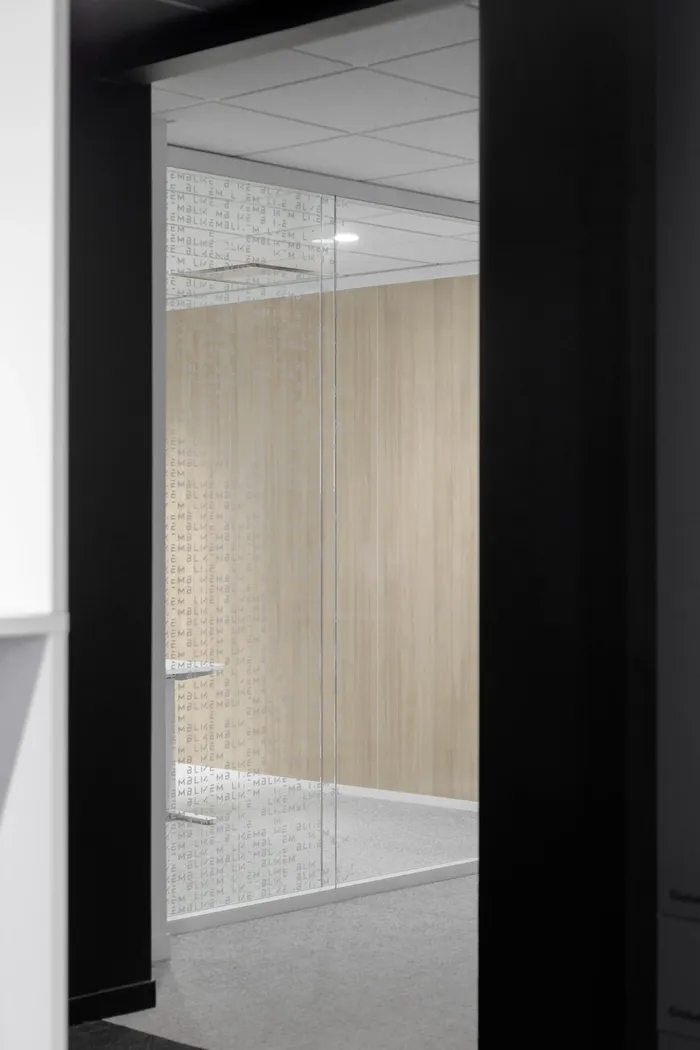
Diversity in work typologies forms another key focus. Open workstations, collaborative areas, and enclosed offices coexist in a fluid layout, demonstrating different professional configurations. The enclosed offices, largely glazed, highlight the architectural partition systems while maintaining transparency and natural light. Glass here plays a strategic role: it exposes the construction technology while preserving a sense of openness and visual continuity.
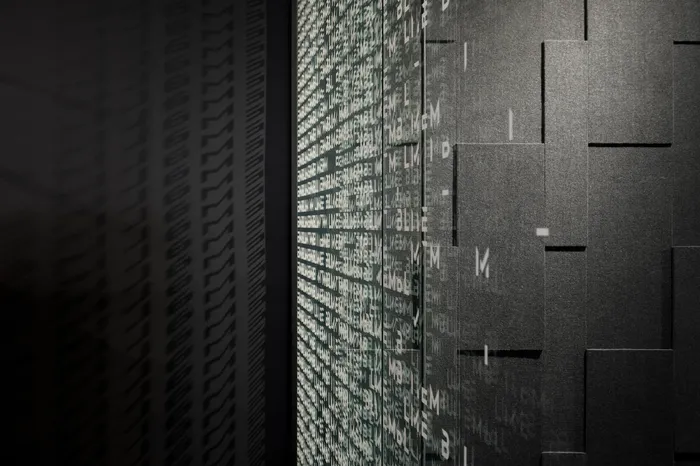
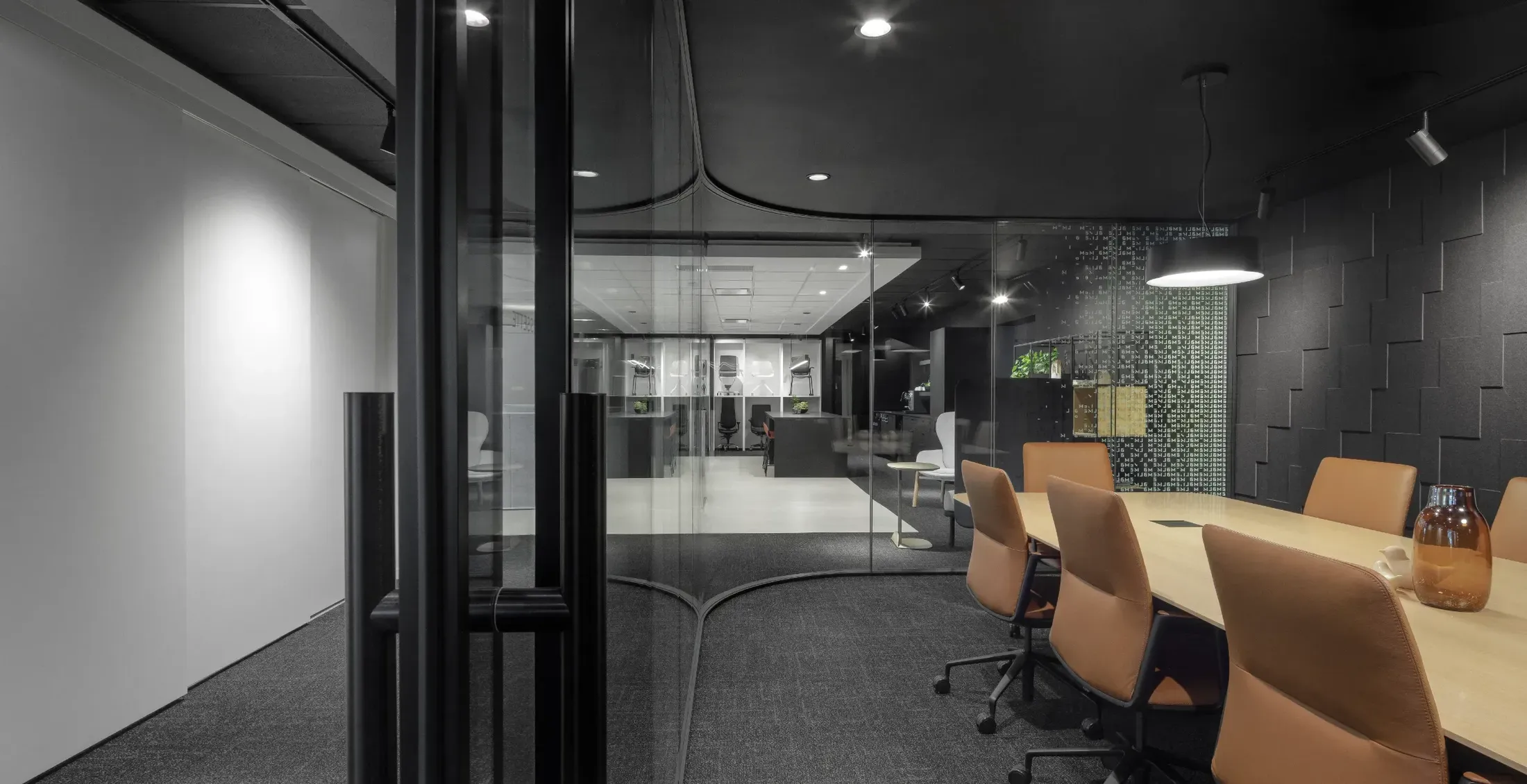
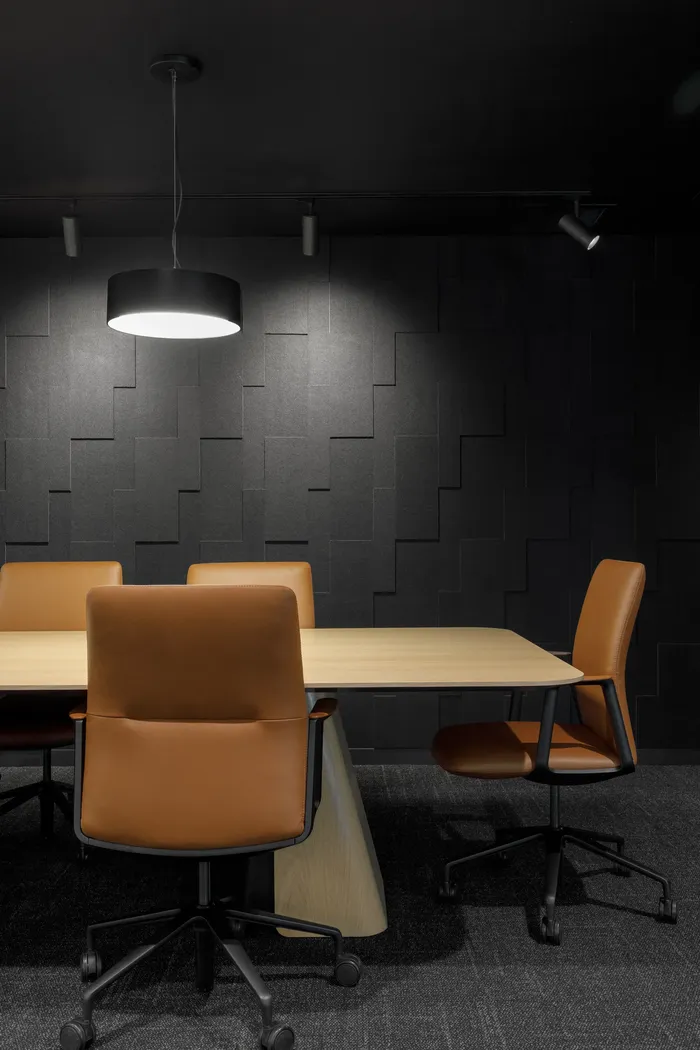
In an environment where collaboration, presentations, and focused work overlap, acoustic management proved essential. The integration of sound-absorbing and textured materials, including architectural felt, helps control reverberation and ensures conversational comfort. Although discreet, the acoustic strategy actively enhances the overall spatial experience.
The conference room, in contrast, emphasizes a more enveloping materiality. Wood, felt, and leather furnishings create a richer, almost tactile atmosphere that subtly contrasts with the sobriety of the open areas. Its curved glass wall serves as a focal point, anchoring both circulation and social interaction.